How Are Baby Dolls That Look Real Made in Espanol
Alexander Cheprunov/Sputnik
These traditional souvenir toys are full of surprises (and smaller versions of themselves, of grade).
1. Younger than you think
Alexander Cheprunov/Sputnik
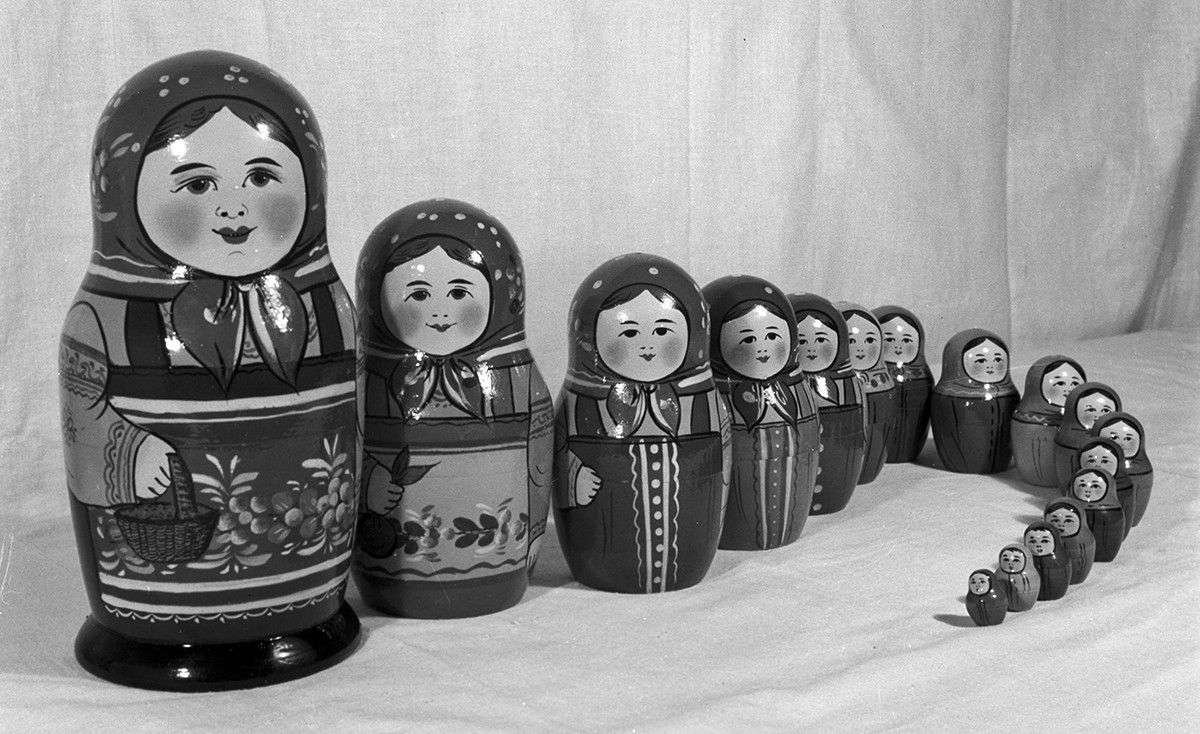
At commencement glance, the Matryoshka might look like an ancient folk graphic symbol, only in fact, it only appeared in 1890 - and it has real "authors", turner (lathe operator) Vasily Zvezdochkin and painter Sergei Malutin. Both men worked at the Savva Mamontov workshop for kids. Mamontov was a famous Russian industrialist, merchant and patron of the arts.
According to i version of Matryoshka's creation, the wife of Mamontov once brought a wooden effigy to the workshop. It depicted a Japanese wise man and contained five figurines of his students inside. Inspired by this multi-layer idea, Zvezdochkin carved eight wooden figures, and Malutin painted them.
Another version says that they created the doll themselves (there had already been some examples of such figures with "surprise" inside before – resembling Easter eggs), and the "Japanese origin" legend only appeared in Soviet times.
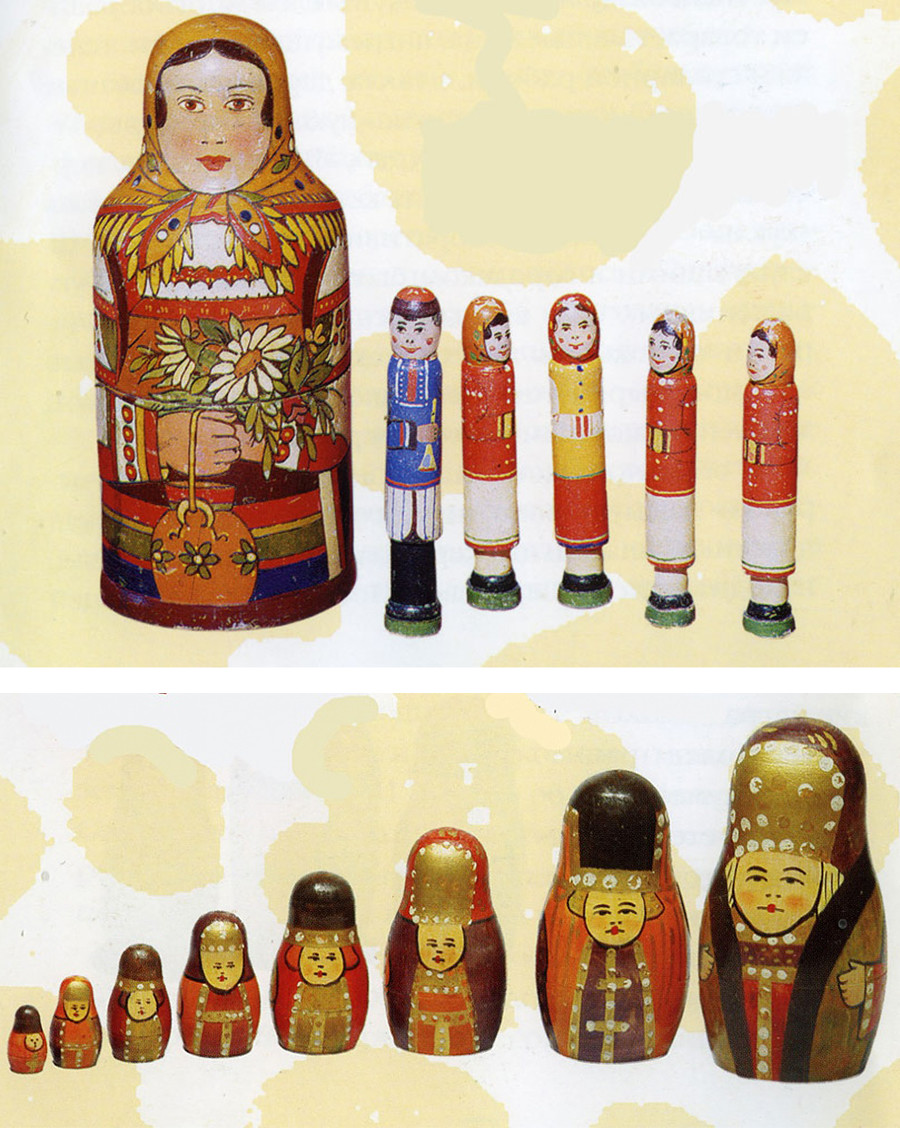
In any instance, the kickoff Matryoshka resembled a lady in a shawl holding a black cockerel. Inside were figurines of boys and girls, with the last ane being a babe. This doll is even so preserved at the Toy Museum in Sergiev Posad exterior Moscow.
2. Matryoshka's existent name
Matryoshkas at the Toy Museum.
Legion Media
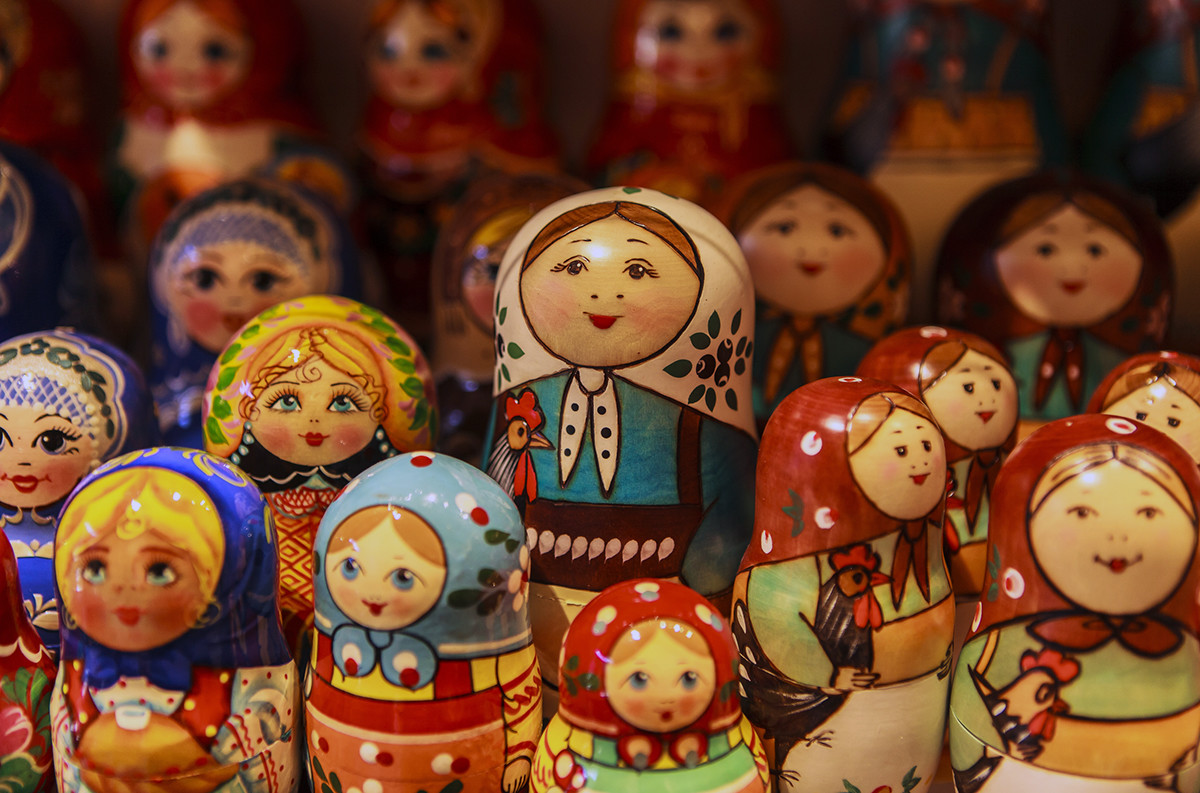
Matryoshka is actually the "pet name" for the female person name Matryona, that was pop in the 19th century amidst peasants and means "mummy", "respectable lady" or "the mother of a big family". Some rumors say that it was the name of Mamontov'due south housemaid. Subsequently all, the proper name perfectly suited this Russian doll with the entire "family unit" within.
3. At that place was a big gap in Matryoshkas production
On the brink of the 20th century, Russian folk style became trendy in architecture, music, and art, thank you to Sergei Dyagilev'south 'Russian Seasons' and regular international crafts exhibitions. Russian Matryoshkas were on display in Paris, Berlin, London, Greece, Turkey and the Middle Due east. After the fall of the Russian Empire, the product of these dolls went into decline: the state was engaged in a civil war and then in World State of war II.
The "virtually Russian souvenir" was reborn in the late Soviet Wedlock, when lots of foreign tourists began visiting the country and craftsmen started reviving quondam workshops.
4. In that location are five main Matryoshka painting styles
Matryoshka, 1933.
Sergiev Posad Country Historical Art Museum
At that place are several Matryoshka production centers in Russia and therefore more than one principal fashion of painting. The nearly famous fashion was built-in in Sergiev Posad (or Zagorsk in Soviet times), the city that has a long history of making wooden toys. They draw girls in a shawl and a saraphan (folk wearing apparel) with an apron, using but 3-four colors (usually red, xanthous, dark-green) with black contours.
Some other style of painting belongs to craftsmen from the village of Polkhov Maidan (near Nizhny Novgorod). They decorate their dolls with roses in bloom.
Matryoshkas fabricated in Semenovo (Nizhny, as well) vesture yellow or cherry polka dot shawls and hold flowers. Usually, these Russian dolls consist of half-dozen-eight figures.
5. Choosing the right type of woods for matryoshkas is the key
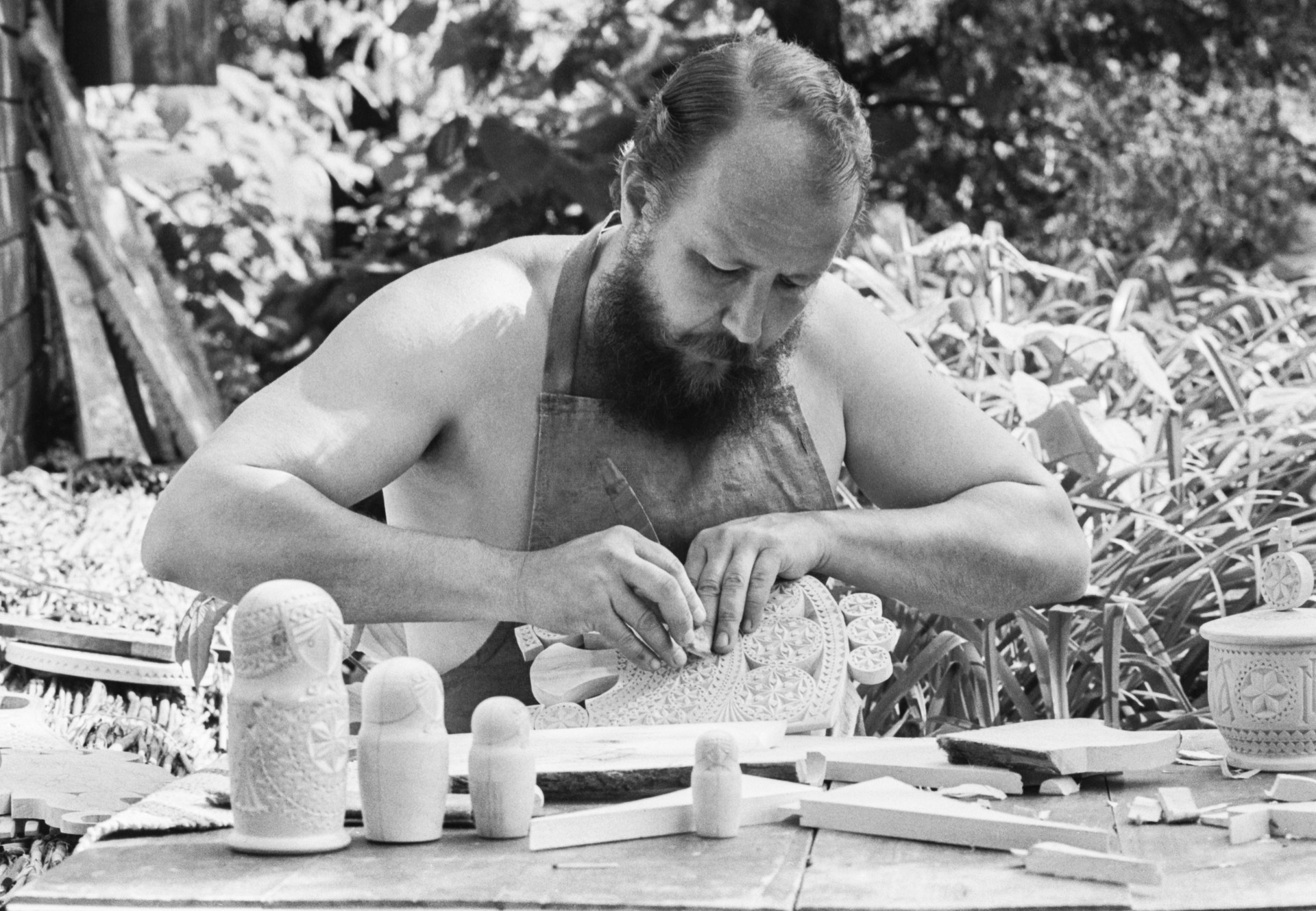
Making the doll.
Boris Kavashkin, Oleg Nederya/TASS
A Matryoshka starts from the right woods. The near suitable tree for making the doll is a linden. Nonetheless, some makers likewise apply wood from birch, aspen, or larch trees. The tree should be cut in early on spring or wintertime, when it has little to no sap. The bottom role of the doll is fabricated from wood that was dried for ii to 3 years. The upper part is fabricated from fresh wood, which will dry afterward: that's why the doll can close so tightly.
6. The double meaning
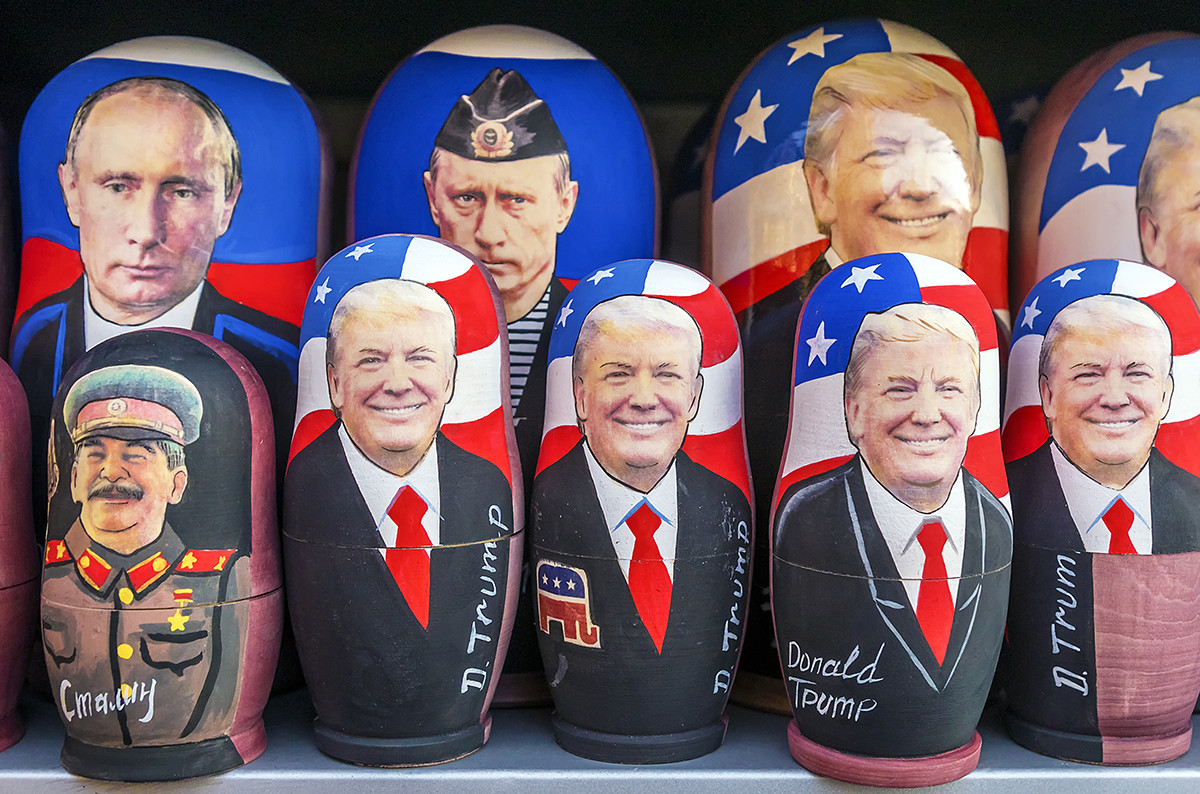
Russian artists often played with the Matryoshka concept to include irony in their creations. Even earlier the Revolution, there were such dolls as the groom and the bride with LOTS of their relatives inside. In 1912, commemorating the 100th ceremony of the Patriotic State of war, Kutuzov and Napoleon dolls with their armies within were made.
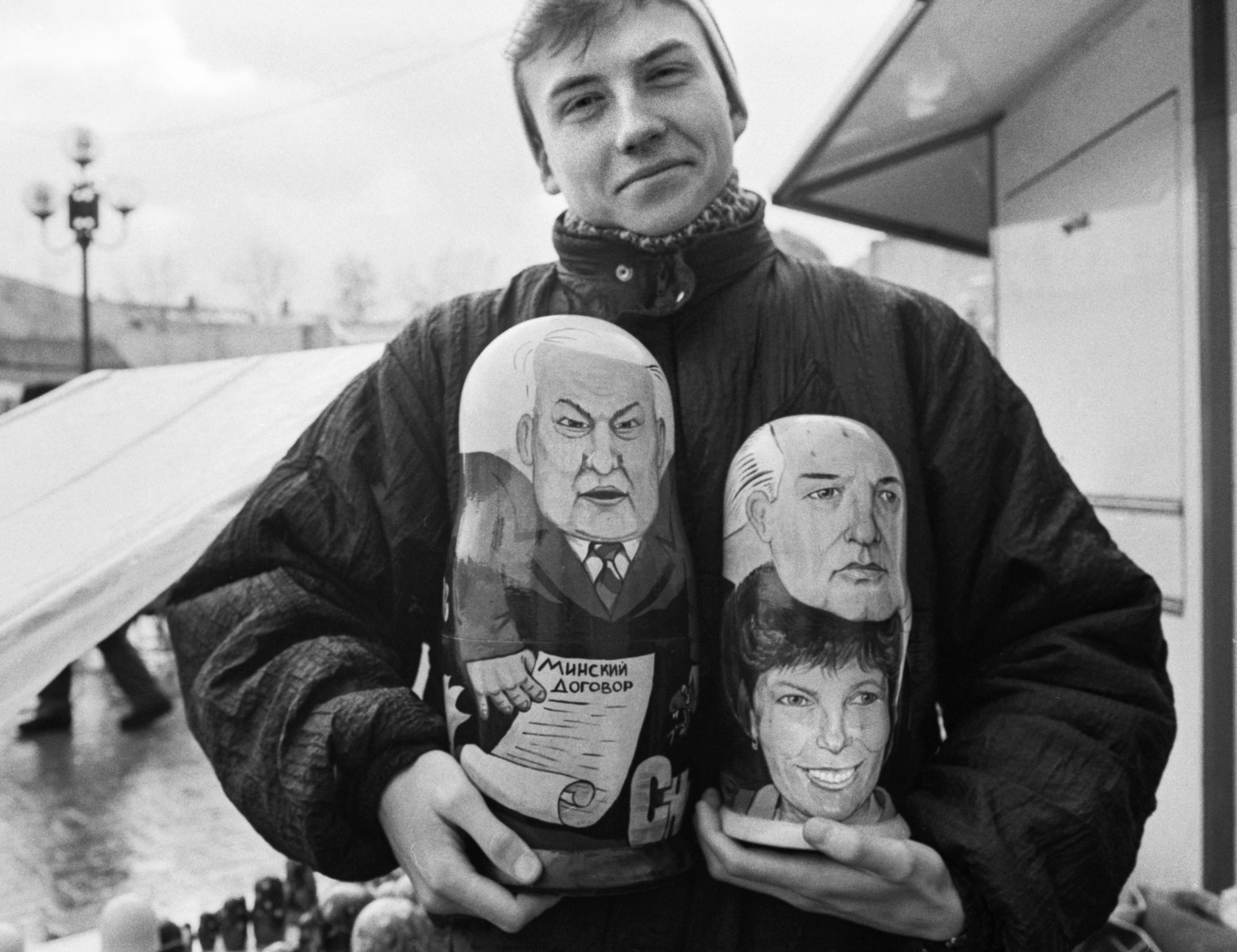
Since Perestroika, craftsmen have been creating Russian dolls depicting famous politicians from all over the globe. Y'all tin easily find Matryoshkas with Lenin, Trump and Putin in the local souvenir shops. Who do you lot think is within them?
7. The biggest Matryoshka is located in Mainland china
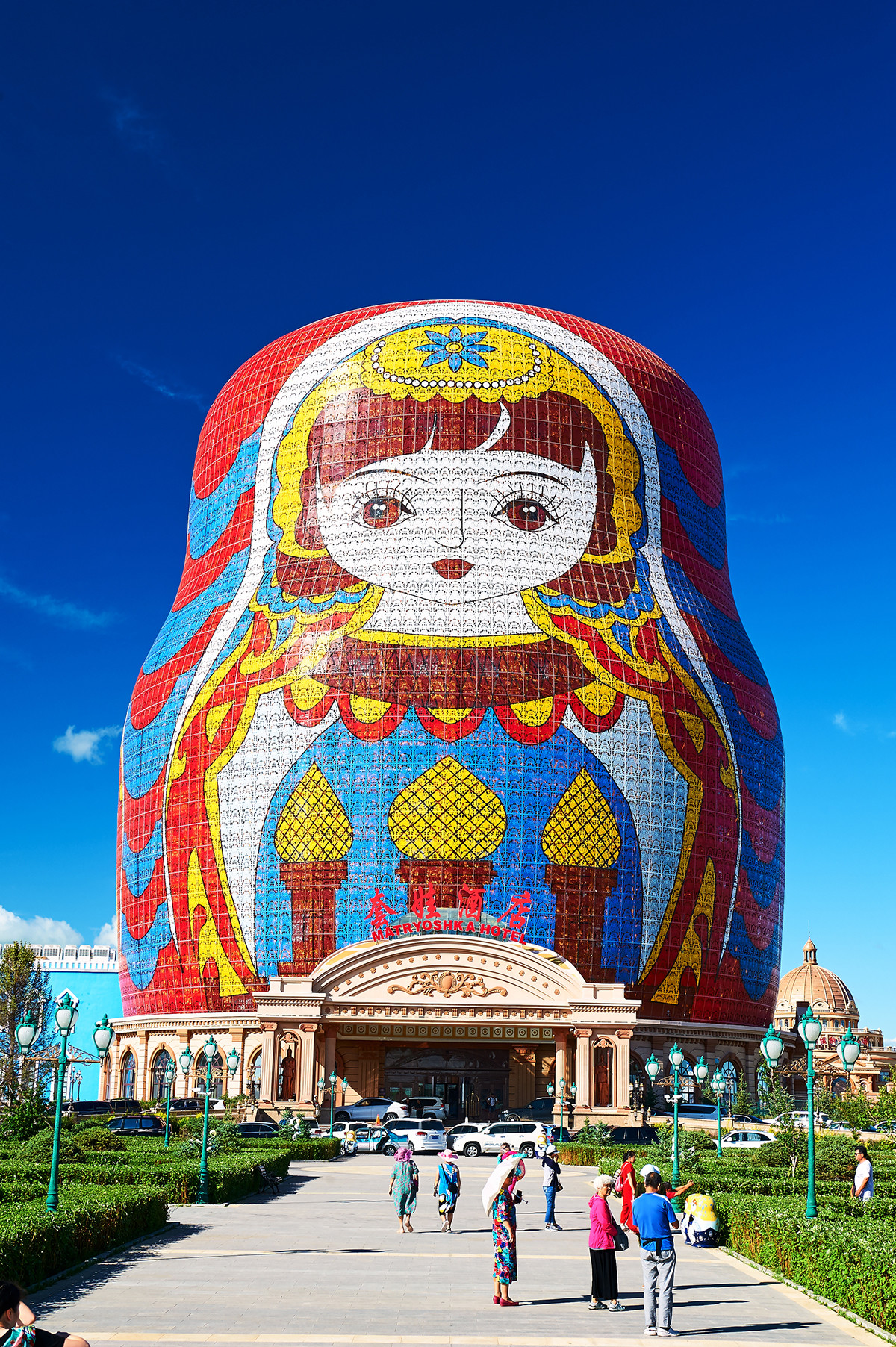
Nigh the Russian-Mainland china border, in the Chinese metropolis of Manzhouli, is a mall and amusement park chosen 'Matryoshka' with officially the biggest Russian doll in the world. Information technology'southward height is a whopping 30 meters. The principal Matryoshka is surrounded by eight smaller dolls and 200 even smaller figures. Moreover, the vast majority of modern Matryoshkas are besides now made in Red china. In Russia, dolls are still produced in some villages in Nizhny Novgorod. Then there's every risk that while on Arbat street in Moscow and/or at other tourist locations in Russian federation you volition accidentally buy a Chinese fabricated Matryoshka. So, double check with the shop assistant.
If using any of Russia Across's content, partly or in full, always provide an active hyperlink to the original material.
Go the week'southward best stories directly to your inbox
Source: https://www.rbth.com/arts/332116-matryoshka-russian-doll-facts

Post a Comment for "How Are Baby Dolls That Look Real Made in Espanol"